Monday, February 11, 2013

Paris, France: The City of Cities


Best For:  Charm, Culture, Culinary Scene, Shopping, and Nightlife
Best Time to Visit:  Year-Round

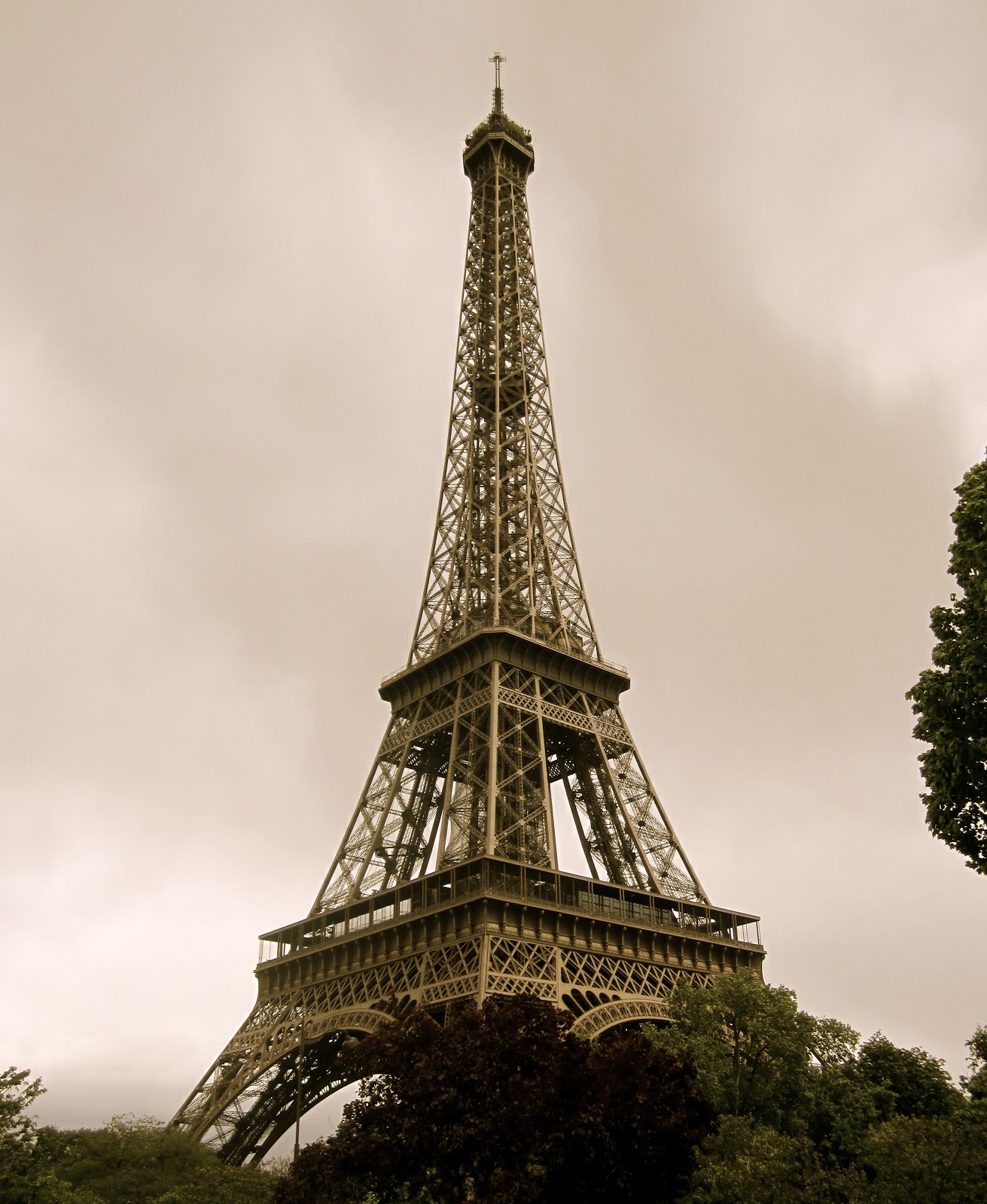
The Eiffel Tower
The first time I visited Paris, I stayed in the heart of the Latin Quarter, steps from the Sorbonne, surrounded by glamorous, cigarette-smoking, impossibly slender and fashionable youth.  Intimidated, I cautiously ate at the trendy cafés and shopped in the stylish stores of the 5th arrondissement.  This was the stereotyped Paris of my imagination.  The second time I visited, I stayed in the unpretentious Oberkampf.  I remember thinking the first time I walked to the metro stop, "there are real people in this city."  The district's shabby chic coffee shops and wine bars were inviting to this Midwestern girl.  Still, I can't tell you which experience was the better one.  Go to Paris, and go back several more times.  You'll find a different city waiting for you with each trip.   

Charm:  Many European cities are either known for their majestic and opulent landmarks or their quirky and unassuming neighborhoods.  Paris has both.  Visitors will be equally enchanted by the winding streets of the Latin Quarter as they are by the grand boulevards displaying the city’s classic sights.  Spend a significant amount of time just wandering and soaking in the beauty.  A twilight boat tour on the Seine is so dazzling, it can even make Paris skeptics fall in love with the city.

Rooftops of Montmartre
Culture:  First-time visitors will have a list of must-see sights to tick off their itineraries.  The Eiffel Tower, Cathédral Notre Dame, Louvre, Arc de Triomphe, and Sacré Coeur all give you that “wow, I’m really in Paris” feel and are an essential introduction to the city’s cultural history.  The remainder of your time sightseeing can be spent tailoring your trip to your liking.  Art and museum buffs have plenty of world-class options, including the Musée d'Orsay, which features 19th century impressionists.  History lovers will want to check out Les Invalides, home to Napoleon's tomb.  Those who love quirky and offbeat sights should consider visiting the underground maze of tunnels and skeletons in the Catacombs.

Culinary Scene:  Paris’s culinary scene gives French food fanatics the opportunity to sample dishes from all around the country.  If you choose your restaurant wisely, you will likely get a better version of the food than if you went straight to the source region.  Paris has the second highest number of Michelin star restaurants in the world, just behind Tokyo.  But not every meal is guaranteed to be great. Tourist traps abound, so don't be afraid to ask the locals where their appetites lead them.   

Louvre and Gardens
Shopping:  From the haute couture of the Champs-Elysees to the trendy boutiques of the Marais and the vintage shops in Saint-Germain-de-Pres, Paris has something to offer any type of shopper.  Bargain hunters will want to consider coming in January when the entire city goes on sale.  Très chic shoppers will remember to always greet store clerks with a “bonjour” and bid farewell with an “au revoir.”  

Nightlife: The city’s after-dark scene has a distinctly upscale feel.  Parisians prefer to sip libations in corner cafes, wine bars, and trendy nightclubs -- those visitors who prefer hole-in-the-wall bars or low-key pubs might have a bit more trouble finding a comfortable drinking spot.  If you’re committed to experiencing the Parisian scene, some good choices include the thriving Marais, chic Champs-Elysees, and unpretentious Belleville areas.  For a taste of vintage Paris, roaring 20’s style, try a cabaret in Montmartre. 

France has so much to offer beyond Paris that it gets difficult to choose where to go next.  Stay tuned for an upcoming blog post linking different travel interests to the French regions that offer them.

If you’re hopping on a plane or inter-Europe train after your stay here, Rome, Barcelona, and Vienna are Paris’s most comparable destination rivals.   

Wednesday, February 6, 2013

Five Surprising Culinary Scenes in Europe


Cities such as Florence, Paris, and Barcelona are renowned for their gastronomic offerings.  With culinary tourism on the rise, more people are traveling with the sole purpose of experiencing local cuisines, attending food and wine festivals, or taking cooking classes at culinary institutes.  On a continent showcasing a wide variety of high quality fare, tourist classics often overshadow more offbeat food locales.  Consider eating your way through these culinary hidden gems.

Gothenburg, Sweden: “Hey honey, let’s go out for a nice Swedish dinner tonight.”  Sounds weird, doesn’t it?  Aside from in the cafeterias of a certain big box furniture store, Swedish cuisine has yet to catch on in America.  The cards are stacked against the country’s chefs, who are working with barren landscapes and five-month winters that make crop growth and harvest difficult.  But the Swedes are making the most of their local ingredients, and Gothenburg is at the helm of the charge.  Chefs here are whipping up dishes featuring traditional staples, such as reindeer and herring.  Before you cringe, savor the thought of this:  crayfish and squid with a shellfish sauce and crispy potato filled with crab.  Yum. 

Hungarian Palacsintas
Budapest, Hungary:  Hungarian cuisine goes way beyond goulash.  Meats, rich sauces, and hearty dumplings are simmered together in cast-iron skillets, creating the ultimate amalgamation of Eastern European comfort food.  “Lighter” dishes include a wide variety of stews and savory palacsintas (pancakes stuffed with meats and bathed in cream sauce).  The Hungarians are also passionate about their pastries and wine, so raise a glass or a slice of Dobos torte (a layered sponge cake with chocolate butter cream filling), and toast to indulgence. 

Thessaloniki, Greece:  Though you can get amazing food in Greece’s more popular tourist spots, true foodies will want to verge off the beaten path and head north to the country’s second city.  Influenced by neighboring Turkey, Thessaloniki’s cuisine is distinguished by its use of spices.  Ouzeris serve mezedes (Greek small plates), the selection of which changes with the seasons.  Summer dishes feature seafood, while winter is more about game meats.  Meals are complemented by ouzo (an anise-flavored aperitif) and local wines.

Traditional Pie and Veggies
London, England:  We all know the stereotype:  British food is terrible.  After all, any cuisine that uses malt vinegar to enhance its food probably needs to be re-evaluated, right?  Over the past couple of decades, London chefs have been doing exactly that.  Fergus Henderson is largely responsible for the resurgence of offal cuisine (or nose to tail eating), which makes use of every part of an animal.  Don’t necessarily expect a new take on the food – offal cuisine has deep roots in British history.  Just plan to be impressed by how good it is.  And if British food still isn’t your thing, try chicken tikka masala, the UK’s national dish.    

Lyon, France:  Most people head to Paris or one of the famous wine regions to enjoy French food.  But Lyon, located in east-central France, is the birthplace of the country’s time-honored cuisine and is the real food capital of the country.  Squeeze into one of the city’s affordable bouchons (eating taverns) and try a Lyonnais specialty, such as a quenelle (egg, cream, and flour dumpling) or andouille sausage.  More adventurous eaters can sample tripe (pig or cow’s stomach lining) or cerverlas (raw pork sausage).  

Bonus tip:  Lyon is to France as Bologna is to Italy.  For Italia’s best food, skip Rome and Florence and head straight to the city nicknamed La Grassa (the fat one).    

Sunday, February 3, 2013

Lauterbrunnen, Switzerland: The Hills Are Alive


Best For:  Natural Beauty, Outdoor Activities, Relaxation, Charm, and Public Transportation
Best Time to Visit:  Year-Round

The Valley Floor
As part of a European tour in 2009, I planned a two-night stopover in Lauterbrunnen so that I could go look at some pretty mountains.  I knew that the neighboring town of Interlaken had a reputation for attracting backpackers and frequenters of active-wear shops, so I booked a room in the village that seemed more my speed.  The minute I stepped foot in Lauterbrunnen, I realized I had made a grave planning error:  this place was magical, and I needed to spend the rest of my days here.  During the one day I had in the region, I was an outdoorsy superstar!  I went sledding on top of the Jungfrau (at 11,000 ft!), zip-lining amongst snow-capped peaks, and hiking under crashing waterfalls (though I passed on jumping off the cliff side in a flying squirrel suit).  Then, true to form, I saddled up at a café, ate raclette, and watched the world go by... and in this heavenly wonderland, that world mainly consisted of mooing cows.  So, go to Lauterbrunnen, even if you do just want to look at some pretty mountains, but be prepared to find that athlete lurking inside.

Top of the Jungfrau
Natural Beauty:  The Lauterbrunnen Valley is one of the world’s great visual stunners.  Nestled in the mountainous Berner Oberland, it presents a striking combination of landscapes.  Lauterbrunnen allows impressive views of craggy, snow-covered mountains with the soft, lush backdrop of rolling meadowlands.  Running the length of each side of the valley floor are two imposing cliff faces, adorned by no less than 70 different waterfalls.  This spot is especially striking during the warm-weather months, when the expansive valley floor has a vibrant green hue, made to appear even brighter against the electric blue sky and patches of yellow wild flowers.  Lauterbrunnen also makes the ideal base for exploring the region’s other scenic offerings.  Nearby Interlaken, true to its name, links two dazzling lakes:  Thun and Brienz.  Travel to the top of the Jungfrau for breathtaking views of the Aletch glacier and the nearby summits of the Eiger and the Mönch.

Outdoor Activities:  This year-round travel destination offers outdoor activities for both the warm- and cold-blooded sportsman.  Switzerland is the second-most-popular destination for adventure sports in the world (behind New Zealand), and nearby Interlaken is at the heart of the industry.  Here, adrenaline junkies can book guided tours for paragliding, hang gliding, skydiving, bungee jumping, canyoning, river rafting, or rock climbing, to name a few.  Outdoor enthusiasts with a more restrained sense of adventure can explore the area’s many scenic trails on foot or mountain bike.  Snow bunnies will want to take advantage of the many local skiing and snowboarding spots.
       
Looking Down into the Valley
Relaxation:  The valley’s astounding scenery encourages visitors to sit back and soak in their surroundings.  Travelers looking to slow down their pace have many options for relaxation.  Take a ferry ride on Lake Thun and enjoy the water’s serenity before stopping for lunch in one of many charming lakeside towns.  Or, ride the cog train up the mountain, stop in one of the ski towns, and find a café with a breath-taking view. 

Charm:  The quaint, chalet-filled, mountain towns scattered through the region are the cherries on top of this destination.  Lauterbrunnen has one main street with a bakery, cheese shop, small grocery store, bar, and a smattering of hotels and restaurants.  Loiter on one of the eatery’s porches for a twilight dinner, and your meal will almost certainly come with evening entertainment: a farmer herding his cows down the road, their bells clinking a serenade as you enjoy your fondue. 

Public Transportation:  Don’t bother with a car around these parts – the punctual and expansive Swiss rail system does not disappoint even amongst Europe’s tallest peaks.  Lauterbrunnen serves as an excellent transportation hub for exploring the Berner Oberland.  Interlaken, which is easily accessible from all of the major Swiss cities, is one stop down the mountain.  Heading further up the mountain, travelers can stop in their choice of ski villages, each connected to one another by a series of gondolas and funiculars.  Or, just head straight to the top of the Jungfrau, home to the highest rail station in Europe.

The Valley Floor
You could spend an entire lifetime taking in this region’s beauty, but some travelers like more variety in their trips.  Here are some suggestions for Lauterbrunnen trip add-ons: 

Consider heading southeast to Lake Como, Italy, via the charming Swiss cities of Lucerne and Lugano.  Lake Como is almost as beautiful as Lauterbrunnen and offers the added benefits of amazing food, a different culture, the chance to live in the lap of luxury for a few days, and the possibility of a George Clooney sighting.

Head southwest to gorgeous Lake Geneva.  Though not as ideal for sporty-types, you will get a touch of culture, nightlife, and shopping in the lux lakeside cities of Lausanne and Geneva.
Thursday, January 31, 2013

Amsterdam, The Netherlands: Unique is in the Normal


Best For:  Culture, Nightlife, Charm, Shopping, English Widely Used
Best Time to Visit:  April through October

Canals at Day
In my early days as a European traveler, I shied away from Amsterdam.  The canals looked beautiful, and I really wanted to see the Van Gogh Museum and Anne Frank house… but the insecure, high school nerd in me thought that I might not be “cool” enough for this city.  “Everyone will know I’m not coming for the sex and drugs!”  I thought the popular tourists would laugh at me for my interest in the architecture.  Pictures conveying the city’s charm eventually lured me in, and I found a pleasant surprise.  Yes, there is legalized prostitution and soft drug use in Amsterdam, but it blends so seamlessly with the other aspects of the city that you barely notice it’s there.  In fact, the city’s laid back vibe can make the most straight-edged among us feel comfortable enough to take a peek in a coffee shop.  
Culture:  In Amsterdam, the everyday and familiar are celebrated, as bike riders mix with brothels, and citizens stroll by “coffee” shops on their way to work.  Museums such as the Hash Museum, Sexmuseum, Torture Museum, and Tattoo Museum shine an introspective light on what outsiders might consider abnormal.  For the more refined visitor, the Dutch celebrate their famous citizens, paying homage to Van Gogh, Anne Frank, and Rembrandt.  2013 is the ideal time to visit the city and partake in its numerous anniversaries and festivals – the Canal Belt turns 400, the Rijksmuseum (featuring Dutch master painters) reopens after a 10-year reconstruction project, and the Van Gogh museum turns 40, to name a few.

Canals at Night
Nightlife:  The city is perhaps best known for its one-of-a-kind nightlife, which is strongly linked to its tolerant culture.  Take a stroll through the Red Light District, where Dutch families live amongst legalized prostitution.  Herbal enthusiasts will be happy to know that the proposed legislation banning marijuana sales to tourists was struck down at the end of 2012, leaving the city’s coffee shops open to foreigners.  Those interested in partaking in a more “traditional” after dark activity may want to cozy up in one of the city’s many brown cafés, which are named for their tobacco-stained walls.

Charm:  Worldwide, Architectural beauty is often celebrated in grand churches and palaces.  Amsterdam’s glory is best reflected in its domestic buildings.  Visitors will be charmed by leisurely strolls through the Grachtengordel(Canal Belt), where they can appreciate the eclectic gables and houseboats.  The canals especially shine at night, when water sparkles under bridges trimmed with white twinkle lights.

Church in the fall
Shopping:  The Negen Straatjes (Nine Little Streets) is a section of the Canal Belt boasting multiple boutiques, specialty shops, and galleries.  The Albert Cuyp market in the South neighborhood has been called the largest and busiest street market in Europe, and is especially good for people watching. 

English Widely Used:  Amsterdam offers the linguistically shy traveler the opportunity to visit a European city that is more exotic than London or Dublin. Nearly everyone in the city is fluent in English – so much so that you might find yourself questioning your own grammar.

Amsterdam is a small city, and many people can see its highlights in about three to four days.  Here are some suggestions for adding on to your trip:
  • Try some of the less frequently visited cities in the Netherlands.  Haarlem, The Hague, and Utrecht are all within an hour’s traveling distance from Amsterdam and have similar attributes, while also enabling visitors to get a more well-rounded Dutch experience.
  • If you’re really into the larger cultural powerhouse cities, hop a ferry to London.  Then hop another one to Dublin or take a train up to Edinburgh.  

Wednesday, January 30, 2013

Costa Rica: Viva la Pura Vida


Best For:  Natural Beauty, Ecotourism, Outdoor Activities, Relaxation, Family Friendly
Best Time to Visit:  December through April 

Waterfall in La Fortuna
I don't really do nature.  I look at it.  I appreciate it.  Then I go to a café, do some window shopping, or hit up a museum, and if the nature is still in my field of vision while I'm enjoying the cultural sites, I'll appreciate it some more.  So, a couple of years ago when my mom and I decided to skip out on Christmas, I was a bit skeptical about heading to the tropics.  But Costa Rica isn't your dime a dozen Caribbean spot.  The nature is so vibrant, the pace so relaxed, and the people so lovely, it even made me slow down and enjoy the pura vida (pure life), as the locals call it.  By the end of my week here I was scoping out spots for a retirement home.    

Natural Beauty:  Containing up to 6% of the worlds’ plants and animal species in an area roughly the size of West Virginia, Costa Rica has been called the most bio-diverse country on earth.  Varying landscapes offer travelers a visual smorgasbord of black sand beaches, lush rainforests, lava-spewing volcanoes, misty cloud forests, and grand waterfalls.  One of the great joys of a trip to Costa Rica is seeing exotic animals in their natural habitat.  It’s not unusual to spot monkeys hanging in trees or sea turtles inching along the beach.  Bird watchers may even get a glimpse of the rare resplendent quetzal.  Some of the most scenic inland parks include Monteverde and Arenal, while Manuel Antonio and Corcovada are coastal treats. 
   
Monteverde Cloud Forest
Ecotourism:  Costa Rica wrote the book on ecotourism.  With over 25% of its land protected by conservation areas and national parks, the country has led the way in wildlife preservation.  Here, conservation goes even beyond land protection – ecotourism is also in the details.  Hotel key cards prevent guests from leaving their lights on unnecessarily, products are made from eco-friendly materials, and trash bins offer multiple recycling options. 

Outdoor Activities:  Costa Rica is an adventure-lover’s playground.  Hikers, bikers, and rafters can take advantage of the countless trails and white water in the rainforests and parks.  Thrill seekers will not want to miss zip lining above forest canopies – Monteverde is best.  Water worshippers can enjoy scuba, swimming, snorkeling, or surfing on either of the country’s two coasts.

Guanacaste Beaches
Relaxation:  After trekking through the rainforest or battling the ocean waves, visitors will need some time to unwind and enjoy the pura vida.  Those visiting volcanic areas, such as Arenal (pictured right), can take a soak in one of the many hot springs, naturally heated by underground volcanic rock.  Sun worshippers can choose from remote beaches, such as those on the Caribbean and South Pacific Coasts, or more developed spots, like the Guanacaste or Manuel Antonio areas.

Family Friendly:  If you feel like you’ve missed out on international travel since starting a family, consider taking your kids to Costa Rica.  Children of all ages will love its attractions and will especially appreciate not being dragged to boring museums.  Many of the parks offer family-oriented activities such as butterfly gardens and hanging bridge tours.  And who doesn’t love the beach?

Monday, January 28, 2013

Alsace, France: Where the Cuckoo Clock Meets the Croissant

Best For:  Culture, Culinary Scene, Charm, Natural Beauty, Off the Beaten Path
Best Time to Visit:  April through October 


Bergheim, France
You know that stereotype about French people being... well... snooty?  Alsatians squash it.  A couple of years ago, my friends and I got stuck on Alsace's Route du Vin (Wine Road), with no bikes, no car, and absolutely no hope of catching the last train back to Switzerland.  Not too concerned about our plight, we walked along the road, high on the amazing wine we had been tasting and the views of the vineyards under the setting sun.  We began to notice an incredible phenomenon.  The Alsatians in nearly every car that passed us honked, smiled, and.... waved.  And not just a casual acknowledging wave... A jolly, hearty, clown-like wave.  We had expected this kind of hospitality from the restaurant and vineyard owners but not from the random people on the side of the road.  The spirit of the Alsatian people remind me of how I would sum up this region: delightful.

Streets of Strasbourg
Culture:  This region maintains strong ties with its German heritage while remaining proudly French in character.  Having changed hands between the two countries several times, Alsace offers travelers a unique blend of cultures.  Castle ruins line the ridges of the Vosges Mountains, evidence of the region's extensive history as an area of geographical importance.  Cultural tourists will also want to visit Strasbourg's stately, gothic Cathedrale Notre Dame and Colmar's world-class museums 
  
Culinary Scene:  Many people visit Alsace solely for its delicious cuisine - and with good reason, as it's home to 27 Michelin star restaurants.  The Route du Vin spans over 100 miles and is dotted with 67 wine villages.  Winemakers happily open the doors of their winstubs (wine cellars) to tourists who come to sample the white varietals grown in the area.  Alsace's bi-cultural history is especially evident in its food, as many traditional French dishes are served with a German twist.  Coq au vin comes with a side of spaetzel, and duck confit is dished up with sauerkraut.  Regional specialties include tarte flambe and Baeckeoffe.  The Route du Vin celebrates its 60th anniversary this year, making 2013 an excellent time to visit and savor Alsace's culinary delights.


Colmar canals
Charm:  Alsace's villes fleuries (flower towns) are bursting with charm.  Characterized by half-timbered houses and flower boxes on every window, these near perfectly-preserved medieval villages will make visitors feel as if they've stumbled into a real-life fairy tale.  Explore the nooks and crannies of the towns' cobblestone streets, or park yourself at a cafe and watch village life pass by.  You'll especially love Riquewihr's old town walls and Kaysersberg's castle views.

Natural Beauty:  Nature enthusiasts will be entranced by Alsace's rolling vineyards, set against the backdrop of the Vosges Mountains.  Vineyard walks and hillside hikes are great ways to get immersed in the scenery.  The Sentier Viticole des Perles du Vignoble is one of the area's most scenic vineyard trails.

Off the Beaten Path:  Alsace is one of France's best-kept secrets.  Though you will find other tourists here, the majority of them will not be American.  Conversations will involve exaggerated hand signals and piecing together bits of the French (or German) that you learned in high school.  Bring a car, a bike, or a good pair of walking shoes - many of the sites you'll want to see in this region are not accessible by train.

Many people can see the highlights of Alsace in about three days.  Here are some suggestions for adding on to your trip:

Vineyards along the Route du Vin

Nearby destinations that are similar to Alsace include Luxembourg and Germany's Romantic Road.  You can get to either destination in under 3 hours.


Want to add a little hustle and bustle to your trip?  Try nearby Paris, which has French culture, cuisine, and charm, but also offers great shopping and nightlife.  

Saturday, July 7, 2012

Östra Station, Copenhagen

Two weeks ago
Két hete


And by the way, these are the top 3 things that make it possible for me to live one of my dreams and travel - they can help you as well to live as you would like to, have a look: